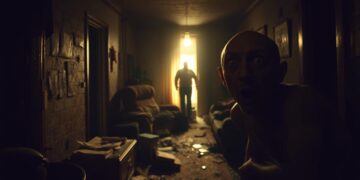
Real-life survival horror isn’t just a movie plot. It’s the reality for those who faced extreme survival situations. People like Michelina Lewandoska, who was buried alive, and Bahia Bakari, the only survivor of Yemenia Flight 626, show us life’s strength.
Alcides Moreno fell 47 stories and survived. Richard Moyer fought a black bear and needed 37 staples for his head. These stories show how people can overcome incredible challenges.
These nightmare scenarios push human limits. Holly Dunn survived abduction by Angel Resendiz, the “Railroad Killer.” Paul Lessard was trapped for 20 hours in freezing cold after a snowmobiling accident.
Timothy Brown became the first HIV cure survivor through a stem cell transplant. The Lifetime series I Survived… shared stories like Mary Vincent’s. She lost both arms to her attacker but walked three miles to safety.
Each story teaches us about courage and survival. They show how ordinary people face and overcome impossible odds.
What is Real-Life Survival Horror?
The survival horror definition is more than just movies. It’s about real-life terrors where people face life-threatening scenarios with no escape. Think of Hurricane Katrina’s floods or the 1986 Chernobyl meltdown. These moments show how survival depends on instinct.
Even a 1993 Chuck E. Cheese’s in Colorado became deadly when an ex-employee attacked. This shows survival situations can happen anywhere. These events reveal how fragile our world is.
The 1959 Dyatlov Pass mystery in Siberia left nine hikers dead, some with severe injuries like missing eyes. This shows survival is a matter of luck and strength. From wildfires to human violence, these moments force people to face their deepest fears.
Disaster survival often means making quick decisions. Whether it’s escaping an earthquake or a collapsing building. These stories remind us survival horror is not just fiction—it’s a reality for many.
Notable Survival Horror Stories from History
Ludger Sylbaris’ survival is almost unbelievable. He was trapped in a stone jail cell during the 1902 Mount Pelée eruption. This disaster destroyed Saint-Pierre, but he and one other survived. Their story shows how people can resist extreme danger.
War survivors like Louis Zamperini and Russell Phillips faced incredible challenges. They were lost at sea for 47 days after their plane crashed. Then, they were held in harsh Japanese prisoner camps. Their stories show how people can endure extreme hardships.
Tsutomu Yamaguchi is a true survivor. He was exposed to radiation twice, once in Hiroshima and again in Nagasaki. Doctors said he couldn’t survive, but he lived for decades after the bombings.

These stories show us that survival is not just luck. It’s about chance, preparation, and determination. They remind us that the human spirit can overcome even the darkest disasters.
Modern-Day Survival Horror Scenarios
Modern disasters like Hurricane Katrina in 2005 show survival horror is real. When Katrina hit New Orleans, thousands faced flooding and chaos in shelters like the Convention Center. Survivors tell stories of desperation, showing how failures in modern infrastructure make crises worse.
Transportation accidents also show human strength. Chris Gursky survived a harrowing two minutes dangling from a malfunctioning hang glider. His story is one of many recent survival stories where quick decisions mean life or death. Medical marvels like Anna Bågenholm’s 40-minute underwater ordeal under ice, or Harrison Okene’s 60-hour air pocket survival, prove the human spirit’s limits are tested.
Technology complicates and aids survival. While malfunctions like Okene’s sinking tugboat or Gursky’s equipment failure come from modern tech, innovations in rescue operations—like sonar or drones—now save lives. Yet, these events fuel current events horror, making headlines that blur the line between real life and intense video game scenarios.
Psychological Impact of Surviving Horror
Surviving a traumatic event can deeply affect the mind. PTSD can disrupt daily life with flashbacks and anxiety. Yet, trauma recovery is possible with therapy and support.
Aron Ralston’s 2003 canyon entrapment is a powerful example. He amputated his own arm to survive. His story shows how survival psychology can change after trauma. He rebuilt his life and became an advocate for wilderness safety.

“Horror survivors often experience a mix of fear and empowerment,” says trauma researcher Dr. Sarah Ellis. “The brain rewires, but healing requires time.”
While PTSD is often discussed, post-traumatic growth offers hope. Studies show 34% of survivors report stronger relationships and a new sense of purpose. The pandemic showed unexpected resilience, with horror fans possibly having better mental health.
Adrenaline spikes from fear can even boost heart health temporarily. But, chronic stress harms well-being. Understanding survival psychology means seeing both struggles and strength.
Therapies like exposure therapy help survivors reframe their trauma. Support groups foster psychological resilience. Survivors often discover hidden capacities, showing that survival is not just physical—it’s the mind’s journey to clarity.
Famous Films Inspired by True Events
Survival movies like 127 Hours and The Impossible take real-life stories to the big screen. They show how people can overcome incredible challenges. For example, Aron Ralston’s story of being trapped by a boulder or the 2004 Indian Ocean tsunami.
Hollywood adaptations, such as Everest (2015) and Rescue Dawn (2006), mix fact with fiction. They create stories that keep us on the edge of our seats.
Disaster films like Alive (1993) and Unbroken (2014) show survival against all odds. They tell stories of the Andes flight disaster and Louis Zamperini’s WWII experience. These films highlight the strength of human spirit.
Even horror movies, like A Nightmare on Elm Street, draw from real events. For example, a 1981 New Mexico incident where 26 refugees died under mysterious circumstances.
True story films like The Impossible (2012) and Black Hawk Down (2001) blend fact and fiction. While Rescue Dawn was praised for its realism, others like Winchester (2018) add supernatural elements for suspense. These movies often make us curious about the real events behind them.
People are drawn to these films because they’re based on true stories. For example, Everest dramatized a 1996 disaster that killed eight people. And Monster (2003) explores Aileen Wuornos’s crimes. Films like Apollo 13 (1995) inspire hope with their survival stories. Even though they take creative liberties, they remind us that truth can be even stranger than fiction.
Survival Skills Learned from Real Events
Real-life disasters teach us hard lessons. Mauro Prosperi survived 10 days in the Sahara by drinking bat blood and using wet wipes for moisture. Aron Ralston used his first aid skills to survive after cutting off his own arm. These stories highlight the importance of emergency skills and quick thinking.
During the Bosnian War, Selco showed that mental toughness is key to survival. People like him stayed alive by being extremely aware of their surroundings.
Wilderness survival experts suggest using the S.T.O.P. method—Stop, Think, Observe, Plan—to avoid panic. Brian Robeson spent 54 days in Canada’s wilderness by trapping fish, building shelters, and rationing food. Clean water is essential: without it, humans can die in days.
Boiling water kills pathogens, a basic survival technique. In Argentina’s crisis, families foraged and bartered for food when it was scarce.
“The right mindset keeps you alive when supplies run out.”
Experts recommend stockpiling two weeks of supplies for disaster preparation. Mental strategies like setting small goals and staying positive help build resilience. Studies show that hopeful attitudes can speed up recovery from injuries.
Learning to start fires, build shelters, and signal for help are critical emergency skills. These lessons turn horror into actionable wisdom for everyone.
The Role of First Responders
Emergency responders are true heroes who face danger head-on. During Hurricane Katrina, they worked hard to reopen hospitals. This showed how vital their coordination is in disaster times.
They perform daring rescues, like the 2012 underwater mission that saved diver Harrison Okene. Yet, they face huge challenges. They work in chaos with limited resources, making life-or-death decisions quickly.
These heroes also face unseen battles. Training, including VR, prepares them for crises. But, the real world’s stress is overwhelming. Bruce, a police officer, suffered years of trauma from crisis exposure.
Studies show better training can lower risks. But, the emotional toll remains a big challenge. It shows that even heroes need support.
Community support is key to their success. When disaster hits, they count on our help to keep saving lives. Their bravery and resilience remind us that heroes are always ready, no matter the cost.
Lessons Learned from Survival Horror
Survival horror stories teach us more than just fear. They show us how to prepare for disasters. Experts say we need more than just basic supplies. “Three days of supplies won’t cut it,” warns a disaster professional. “Aim for two to three weeks of essentials.”
This advice helped create plans like Southern California’s Catastrophic Earthquake Plan. It’s a blueprint for community resilience through preparedness strategies.

After Hurricane Katrina, we learned a big lesson. When disasters hit, being prepared is key. Keep important documents safe, know basic first aid, and practice evacuation routes.
Modern disaster preparation also focuses on mental strength. Staying calm can save lives.
Horror movies often show characters ignoring warnings. But in real life, listening to local authorities and neighbors is vital. Community drills, like those in earthquake-prone areas, boost confidence. Small steps, like stockpiling water and learning CPR, make survival plans real.
Survival is a team effort. By learning from past disasters, we can face the future with hope. Every family and town can become strong against chaos with the right preparedness strategies. Let’s turn horror into hope, step by step.
Profiles of Noteworthy Survivors
Extreme survival stories show how regular people can become heroes. They prove that resilience is real. It’s about the human spirit overcoming tough times.
“The cold didn’t stop me—it made me fight harder,” said Vesna Vulović, who survived a 33,000-foot fall after her plane exploded. Her story is one of the most shocking in aviation.
Tsutomu Yamaguchi survived two atomic bombs and lived to 93. He rebuilt his life after seeing history’s worst. The Andes survivors, stuck for 72 days, made unthinkable choices to survive. Their stories show what humans can do.
Aron Ralston cut off his own arm to get free in Utah’s desert. Ludger Sylbaris survived a 1902 volcano by using his knowledge of wine cellars. Their stories show the importance of adaptability and hope.
Survivor stories often talk about setting small goals, holding onto hope, and trusting instincts. They teach us that survival is as much about mindset as it is about luck.
The Media’s Role in Survival Stories
Disaster coverage often struggles to balance urgency with empathy. Ethical journalism avoids exploiting trauma reporting for shock value. It prioritizes survivors’ dignity over sensationalism. Sensational headlines may draw clicks, but news ethics demand respect for human experiences.

Survival story reporting today faces new challenges. Social media amplifies voices but risks spreading misinformation. Ethical journalism ensures accuracy, avoiding exploitation of human suffering for entertainment.
Responsible disaster coverage prioritizes consent and context. Trauma reporting done well turns survival stories into lessons, not spectacles. Sensationalism undermines public trust, while ethical practices foster understanding.
Media’s role in survival narratives shapes how society responds. Ethical storytelling honors resilience without reducing tragedies to headlines. Survival story reporting at its best builds empathy, not fear.
Resources for Further Learning
Start your preparedness education with survival books like Lucifer’s Hammer. It mixes fiction with real disaster scenarios. Disaster preparation courses, like The Survival Mom’s Fast Track Prepping course, give you steps to build emergency kits and plans. These resources turn theory into practical skills.
Emergency training programs, like FEMA’s online modules or local CERT classes, teach crisis management. Look for free webinars on creating evacuation routes or storing food supplies. Many communities host hands-on workshops on first aid and shelter-building.
Government guides, like the Southern California Catastrophic Earthquake Plan, offer region-specific strategies. Online platforms have disaster preparation courses with quizzes to test your knowledge. Books like The Prepper’s Blueprint explain long-term stockpiling and communication systems.
Check local libraries for survival books or sign up for emergency training through Red Cross workshops. Schools and nonprofits often host free seminars on natural disaster responses. Small steps like these make a big difference in staying informed and ready.
The Future of Survival Horror Awareness
Future disasters and emerging threats like climate change will shape how we prepare. Survival technology, like NASA’s DART mission, shows our ability to tackle cosmic risks. Innovations in climate change survival include solar-powered devices and emergency apps.
Technological preparedness helps communities stay ready. These tools blend with traditional methods, creating networks that protect people and resources. While challenges like extreme weather grow, so does our ability to adapt.
By learning from past survival stories and using smart solutions, we can face tomorrow’s dangers with confidence.