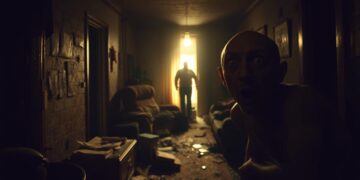
Paranormal encounters happen all over the world. Places like the Villisca Axe Murder House are haunted. Saphyre had scary experiences for 2.5 years.
More than 40 stories show supernatural events. For example, a moldy cheese came back to a fridge by itself. A haunted Elsa doll spoke in many languages without power.
Stories like the 1973 Enfield creature and the 2014 Villisca incident are hard to explain. They show things that don’t fit into our world.
People like PrivateM20 saw shadow figures. Mrs. Belle had a werewolf encounter. These stories mix fear and wonder.
Even skeptics are surprised by some stories. The Bretzuis family found old animal remains in their walls. Kennedy Ife was accused of possession and restrained.
Whether you believe in spirits or science, these stories are thought-provoking. They make us question what’s real and what’s beyond.
What Are Paranormal Encounters?
Paranormal encounters are experiences that science can’t explain. They include ghost sightings, like feeling a presence or hearing voices. These events also include cold spots, strange lights, and objects moving by themselves.
Over 15% of people worldwide say they’ve felt a ghost’s presence. But only 1% claim to have seen a full human ghost. These experiences mix spiritual phenomena with how we see the world.
Supernatural events often lead to debates. Some think they come from emotional energy left behind. Charles Fort documented 40,000 unexplained cases, showing how common these stories are.
Today, 66% of Americans say they’ve had inexplicable experiences. For example, hearing a loved one’s voice before they pass away. These moments can change how we think about life and death.
Studies show believers often have less science knowledge or more anxiety. A 1970s study found those in lower social roles were more likely to believe. Yet, these experiences are deeply personal and can alter someone’s worldview.
The Parapsychological Association, started in 1957, once aimed to find answers. But mainstream science is skeptical. Today, most research is in specialized journals. Despite this, millions share their stories, showing their lasting impact on our curiosity.
Types of Paranormal Encounters
More than 60% of Americans believe in ghost sightings or other supernatural events. These experiences often fall into clear categories. Ghost sightings range from fleeting shadows to full human forms. Many see figures in historic haunted locations like battlefields or abandoned homes.
A 2023 study found 30% of self-reported encounters involve visual apparitions.

Poltergeist activity includes sudden noises or objects flying through the air. Unlike friendly spirits, these events often startle homeowners. Cold spots and door slams mark their presence.
On the other hand, spirit communication happens through whispers or touches. Some claim interaction with deceased loved ones. Investigators use digital recorders to capture EVP recordings—voices not heard in real time.
Residual hauntings replay past events, like footsteps echoing historical tragedies. Shadow people stalk corridors at night, while orbs—often captured in photos—are thought to be spirit energy. Over 40% of paranormal investigators report finding cold spots linked to these signs.
Whether real or misinterpretations, these encounters keep the topic alive in American culture.
Famous Paranormal Encounters in the U.S.
Traveler’s lists of famous haunted places often highlight Colorado’s Stanley Hotel. This Stanley Hotel ghosts hotspot inspired Stephen King’s *The Shining*. Guests hear piano melodies and see shadowy figures.
“My photo showed a shadowy figure. Days later, I felt an unexplained illness,” said Henry Yau, a 2020 visitor. Investigators call it one of the site’s most puzzling cases.
San Diego’s Whaley House, dubbed “America’s most haunted house,” hosts Whaley House spirits. Visitors report cigar scents and footsteps linked to a 1850s murder. A 2018 investigation recorded a child’s laughter matching the death of a toddler who drowned there. Staff say the basement holds the strongest energy.
In Massachusetts, the Lizzie Borden House site of the 1892 ax murders, guests feel cold spots and witness Lizzie Borden hauntings. Moving objects and phantom touches mimic the victims’ wounds. These American haunted locations keep history’s mysteries alive.
Personal Accounts of Paranormal Experiences
Real ghost stories often start with a simple moment that turns strange. One Reddit user saw something gliding down stairs—visible only to their dog, yet felt by everyone. These personal ghost encounters, like the bizarre case of moldy cheese returning to a fridge after being thrown out, blur the line between reality and the supernatural.
Family ghosts sometimes appear in unexpected ways. A family claims a deceased mother’s presence returns when chores are ignored, a pattern found in many firsthand paranormal experiences. Children often describe seeing what adults don’t, like a 4-year-old insisting an “old lady” led her into traffic, or Jacqueline, who befriended her grandfather’s spirit long before learning of his death.

Children seeing spirits with startling clarity. A child in Oklahoma called a “friend” later identified as their grandfather, highlighting how family bonds extend beyond life. These accounts mirror data showing 50% of people claim personal encounters, with 70% believing in the paranormal. Even skeptics might pause hearing about the 40% of hauntings involving shadowy figures or the 35% of sleep paralysis cases linked to sensed presences.
Derek Hayes’ podcast “Monsters Among Us” collects such stories daily. While tools like EMF detectors are common, many rely on gut feelings. Whether real or imagined, these tales remind us that the line between mystery and memory remains thin.
Scientific Explanations Behind Paranormal Events
Paranormal science looks into natural explanations for ghostly encounters. One idea is that infrasound, or low-frequency sound waves, can cause dizziness and hallucinations. A study found 8% of people felt terror in a “haunted” room with infrasound and electromagnetic fields.
Sleep paralysis, where muscles don’t work while awake, can lead to vivid hallucinations. Researchers think this might be why some people see ghosts. Pareidolia, seeing faces in shadows, also plays a part. A study found people who see faces in random patterns are more likely to believe in ghostly visions.
Environmental factors like mold or carbon monoxide poisoning can make people think they’re seeing ghosts. In 13 out of 27 “haunted” places studied, toxic mold was found. Knowing a place is “haunted” can also make people more likely to experience strange things, as a 2018 Pew survey showed.
Paranormal science also looks at psychological traits. Students in arts fields tend to believe in more paranormal things than STEM students. But, many ghost stories and evidence are hard to explain. Science finds patterns, but some mysteries remain, sparking our curiosity.
Investigating the Paranormal: Tools and Techniques
Modern paranormal investigation techniques mix science and curiosity. They use ghost hunting equipment like EMF meters to track energy, EVP recorders to catch whispers, and thermal imaging to spot temperature changes. These tools help figure out if something is supernatural or natural.

Pro methods start by measuring a location’s baseline. They check normal sounds and energy levels. At California’s Whaley House, an EVP recorder caught an unexplained “No” when asked about spirits. Teams do tests again to make sure it’s not just drafts or faulty wiring.
Doing historical research is also important. Places like battlefields or cemeteries often give clues. The Smith family’s shadow sightings matched local tragedies, showing how past events shape modern encounters. Beginners should start with basic ghost hunting equipment like EMF meters before getting more.
Safety is the first rule: always hunt in groups, get permission, and carry a first aid kit. Document everything—photos, logs, and timestamps—to make evidence stronger. While no tool guarantees proof, systematic approaches turn myths into data. Today, paranormal investigation techniques are like forensic science, showing that curiosity and rigor go together.
Popular Paranormal Investigation Shows
Ghost hunting shows have made paranormal investigations a hit on TV. Shows like Ghost Hunters ran for 14 seasons and introduced EMF meters and paranormal TV programs. They mix science and suspense, drawing people worldwide into ghost adventures.
From Dead Files to Ghost Adventures, each series brings its own twist.
Paranormal documentaries like Kindred Spirits aim to help spirits. This contrasts with shows that focus more on drama. Some viewers try what they see on TV, like setting boundaries with spirits.
Paranormal Lockdown is known for its 72-hour investigations. Ghost Asylum explores hospitals known for their eerie stories.
Shows like Ghost Hunters and Paranormal State have sparked tourism to featured locations. Critics say this can make sacred places seem less serious. Yet, shows like Ghost Wars and Haunted mix education with entertainment. The question remains: are these shows about science, storytelling, or both?
Cultural Perspectives on the Paranormal
Cultures around the world see the supernatural in their own ways. They believe in spirits that can be good or bad. Whether these spirits are seen as blessings or warnings depends on their religious views.

In Mexico, a family tried to get rid of a ventriloquist doll by burning it. They believed it was possessed by evil spirits. This shows how religious teachings and cultural beliefs can mix together.
Indigenous rituals and Vodou ceremonies also show how people understand the paranormal. They see ghosts as guides or dangers. This shows how traditions shape our views of the supernatural.
Tragedies like the Spanish Flu have left their mark on local legends. Today, 19% of Americans claim to have seen a ghost. This shows how our cultural backgrounds shape what we believe.
These stories show that the supernatural is more than just mystery. It reflects our histories and faiths. Through prayers, ceremonies, and myths, we try to understand the unexplained.
How to Protect Yourself from Paranormal Encounters
Setting verbal boundaries is a first step in protection from spirits. Telling a presence directly what is allowed can quiet disturbances. For example, clear communication halted activity in some cases.
For cleansing haunted houses, sage smudging or salt barriers work well. In Chicago, a thin line of Kosher salt blocked a ghost at a doorway. For severe cases, burning or burying objects linked to entities—like a haunted doll—may help, though experts advise patience.
Combine sage smudging with protective stones like obsidian or onyx. Pairing them with tiger’s eye amplifies their effect. Visualizing a white light shield or grounding exercises builds resilience against dealing with negative entities.
If traditional methods fail, consult local healers or cultural experts. A Pima tribe ritual resolved a haunting after a priest’s blessing backfired.
Physical health matters too. Vitamin D and exercise strengthen mental clarity, vital for spotting hoaxes or natural causes behind “orbs.” A strong mindset, backed by practices like meditation, prevents energy drain.
The Bible’s Ephesians 6:10–18 advises faith-based shields. James 4:7 urges resisting evil through trust in higher power.
Always prioritize safety. If activity worsens, seek mental health support. Professional investigators or spiritual guides can help balance skepticism and awareness, ensuring protection without fear.
Final Thoughts on Paranormal Encounters
Paranormal encounters are among life’s most captivating mysteries. Erin Egnatz, a seasoned investigator, has spent years exploring haunted sites. Her work with EMF readers and cameras captures eerie moments, but science is unsure of their origins.
Harvard’s parapsychology courses show growing interest in these topics. Yet, skeptics point out that most “evidence” comes from everyday sounds or electromagnetic fields from phones or outlets.
Supernatural beliefs affect millions. Almost 75% of Americans believe in the paranormal, and 20% claim to have seen a ghost. These experiences often lead to spiritual growth, making people question existence and mortality.
But how we handle these experiences is key. Studies show believers might see patterns where none exist. This mindset helps some cope with uncertainty or loss.
Whether it’s haunting voices or cold spots, these encounters call for balance. Stay curious but critical. Research into sleep paralysis or cognitive studies can explain how our brains turn the strange into stories.
As technology improves, new tools might uncover what’s real and what’s in our minds. For now, the thrill of the unknown keeps science, history, and human curiosity connected.