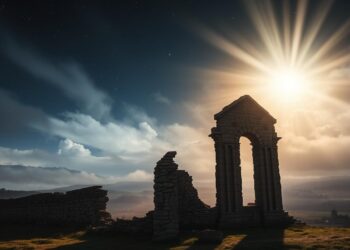
A UK mother’s 2020 gardening project turned into a history lesson. While clearing her Northamptonshire yard, she uncovered a 160-foot WWII air raid shelter by lifting a loose stone. This hidden underground facility proved how ordinary actions can expose accidental discoveries buried in plain sight.
In 1963, a Turkish villager breaking down a basement wall in Derinkuyu exposed an 18-story subterranean structure. This secret shelter, built centuries ago, could house 20,000 people. These finds remind us that beneath everyday life lie worlds unknown—waiting to be revealed by chance or curiosity.
Introduction to Mysterious Underground Bunkers
Places like Derinkuyu in Turkey show off ancient engineering skills. This underground complex goes 280 feet down, housing 20,000 people. It has special ventilation and levels, showing how old cultures used rock for safety.
These hidden spots were built over time to protect people from danger. They were safe during wars and harsh weather.
Secret bunkers exist all over the world. Malta’s Ħal Saflieni Hypogeum is from 4000 BC, with its maze-like tunnels. National Geographic wrote about strange disappearances there, mixing truth with legend.
In Cappadocia, cities like Kaymaklı and Özkonak were built underground. They had homes, wells, and even churches, making them complete ecosystems.
These underground places have changed over time. Derinkuyu’s thick walls and air systems show how ancient people defended themselves. Today, their designs amaze us, showing that underground engineering is more than history—it’s a lasting way to survive.
Famous Underground Bunkers in the U.S.
A grandmother’s basement held a secret: a nuclear fallout shelter with gas masks and survival gear. This shows that U.S. secret bunkers aren’t just for the government. They can also be found in regular homes. These were built during the Cold War, when people feared nuclear war.

Places like Colorado’s Cheyenne Mountain Complex and Pennsylvania’s Raven Rock Mountain Complex are famous. They were built during the Cold War. The Greenbrier resort in West Virginia had a secret bunker for Congress. It was designed to keep lawmakers safe during emergencies.
Now, some of these bunkers are open for tours. They show their hidden pasts. Companies like Atlas Survival Shelters are also seeing more interest. They offer bunkers for $200,000 to $400,000. Even regular homes might have old bunkers, showing that the idea of being prepared is always around.
How Underground Bunkers Are Discovered
Many hidden bunkers are found by chance. In 2020, Rebecca Hobson found a 160-foot WWII shelter in her UK garden while gardening during the pandemic. In 1963, a Turkish man discovered Derinkuyu’s 18-story underground city while renovating his basement. These stories highlight how finding hidden shelters often comes from luck.
Today, bunker discovery methods use both old and new techniques. Ground-penetrating radar scans for hidden shapes, and drones spot surface dips that might mean tunnels. Thermal cameras find temperature changes caused by air flow from sealed areas. These underground structure detection tools helped map France’s Naours tunnels, used in world wars.
Construction workers often find old relics during their work. In Cherbourg, workers found WWII-era missile factories while laying new pipelines. Archaeologists use shelter excavation techniques and satellite data to follow faint clues. Each discovery, whether by accident or with technology, uncovers secrets buried for decades. It shows that history’s best-kept secrets are often hidden just beneath our feet.
The Purpose of These Bunkers
Underground systems like the Derinkuyu complex in Turkey show early uses for shelters. Built to resist invasions and harsh weather, its doors could roll shut to keep out threats. Thousands could find safety inside. Today, bunkers serve many purposes.
The Greenbrier bunker in West Virginia was built for Congress. It covers 112,000 sq ft with a cafeteria and medical areas. Secretly built until 1992, it was ready for nuclear threats.

Civilian and military uses often blend together. Cheyenne Mountain’s NORAD facility was built with dynamite, protecting military leaders during the Cold War. Mount Pony’s bunker held $4 billion in currency to stabilize the economy after a crisis.
Today, bunkers are designed to protect against disasters like earthquakes and cyberattacks. These hidden, strong spaces show our ongoing effort to protect life and resources.
Cultural Fascination with Bunkers
Bunkers capture our imagination in movies, books, and games. They turn into symbols of survival. From James Bond’s lairs to Fallout’s hideouts, bunkers shape our views of hidden worlds.
“This is insane! Such an incredible find! Excuse the pessimistic in me, but I’d definitely keep it as a shelter due to the world’s state😩.”
The viral TikTok of Hobson’s discovery shows our mix of awe and fear. It has over 397,000 views, showing how curiosity meets doomsday prepping. Derinkuyu, once a secret, now welcomes tourists, blending history with survival dreams.
Why do we obsess over bunkers? They reflect our fears and hopes. A shelter’s walls mirror our worries, from nuclear threats to climate change. Even the 1955 Anderson Fallout Shelter, once a relic, now symbolizes readiness. This mix keeps bunkers in the spotlight.
Reasons for Secrecy Surrounding Bunkers
When the Cappadocian Greeks left Derinkuyu in 1923, they took with them centuries of knowledge. This loss highlights how bunker confidentiality can erase history. It happens when cultures change or people move away.
Today, hidden government installations like Camp Peary or Area 51 keep secrets tight. They use strong shelter security measures to protect their operations. For example, Camp Peary, covering 9,000 acres, operates in secret.
The classified underground facilities under the White House, like the DUCC, are also mysterious. They were only revealed in 2018 when a sinkhole exposed parts of it.
Some secrecy comes from human choices. The Greenbrier bunker was hidden for 30 years, with staff not knowing its purpose. Private places like Niihau Island also keep outsiders away.
Now, places like the presidential bunker PEOC keep secrets to protect against threats. With nuclear warheads that can go through 1,000 feet, these shelters need strong shelter security measures. Even public spots like the Greenbrier’s large bunker were built to stay hidden until their secrets were leaked.
How Bunkers Are Constructed
Building underground shelters requires careful bunker construction methods and underground shelter engineering. Ancient places like Derinkuyu’s 18-level city show how to manage airflow. It had 15,000 ventilation shafts to keep people safe for months.
Modern projects, like JFK’s Cold War bunker, were built fast. They used 12 feet of earth and concrete to withstand blasts. Today, engineers use similar subterranean building techniques to ensure strength and safety.
Shelter structural design must fit the geology. Derinkuyu needed big support pillars for soft rock, while Hitler’s Wolf’s Lair used hardened concrete. Modern shelters, like the Survival Condo, use 45 geothermal wells and 386 submarine batteries for years of self-sufficiency.
Even entryways are important. JFK’s 40-foot tunnel and reinforced doors show how access points are designed for survival.
Today, builders face challenges like moisture and seismic shifts. Shipping containers, though cheaper, can rust and collapse without proper bunker construction methods. Companies like Risings Bunkers use reinforced concrete and advanced filtration systems to meet safety standards.
Whether ancient or modern, these underground marvels combine ingenuity and science. They protect lives underground.
The Role of Bunkers During Crises
History shows shelters have always been lifelines. Derinkuyu’s underground city in Turkey is a great example. It protected people during wars in the 8th century and Mongol raids in the 14th century. Even in the 1920s, locals used it to escape violence, showing its lasting importance.

During World War II, bunkers became key. Churchill’s underground War Rooms in London directed the Allied war effort. JFK’s 1,500-square-foot Florida bunker, built in 1960, housed officials during the Cuban Missile Crisis. Its 30-day supplies and 13-foot-thick concrete walls showed how bunkers balanced secrecy and safety.
Today, disaster protection structures face new threats. The Survival Condo in Kansas requires residents to work four hours daily during emergencies, mirroring historical resilience. Vivos xPoint’s 575 bunkers, some costing $200k, highlight how emergency underground facilities adapt. High-end sales jumped 700% in 2016, proving ongoing demand for preparedness.
Modern Uses of Mysterious Bunkers
Underground bunkers are now bunker repurposing into lively spaces. The ancient Turkish tunnels at Derinkuyu welcome tourists, exploring its 18-story depths. It’s a historical bunker conversion that draws visitors worldwide.
In the U.S., the Greenbrier Bunker in West Virginia is now a data center. Raven Rock Mountain Complex, built for thousands, houses government operations today. These examples show how old shelters meet new needs.
Europe’s Wieliczka Salt Mine is a UNESCO site, blending underground facility adaptation with art. It features salt-carved chapels and statues. In the U.S., bunkers are used for mushroom growing, combining old and new.
These projects mix history with modern uses. From Polish salt chapels to U.S. data centers, they show old defenses can solve today’s problems. Their steady temperatures and security make them perfect for energy-efficient uses.
The Future of Underground Bunkers
As global worries increase, bunkers are changing from old concrete shelters to smart, self-sustaining homes. Next-generation bunkers now have hydroponic farms and solar power. This makes them ready for long stays. Companies like Rising S offer sustainable underground habitats for $40,000 to $8.3 million, showing there’s demand for both simple and fancy bunkers.

Today’s bunkers focus on mental health with gyms, movie theaters, and art galleries. The Czech Republic’s Oppidum complex offers this luxury to the rich. JC Cole builds bunkers linked to farms to ensure food security. NASA even studies underground habitats for Mars, showing tech for Earth might go to space.
But, there are challenges. Hydroponic systems in tight spaces often fail, and water contamination is a risk. Yet, survival firms like Survival Condos keep pushing, with $1.3 million units featuring pools and cinemas. The market is growing, expected to reach $175 million by 2030. People are excited, as seen on TikTok.
Next-generation bunkers show our mix of fear and creativity. They’re not just deeper; they’re smarter. They’re a sign of our readiness for whatever comes next.
Visiting and Exploring Bunkers
Bunker tourism is on the rise, with people eager to see underground shelters. Places like Turkey’s Derinkuyu and West Virginia’s Greenbrier bunker draw in thrill-seekers. These tours mix history with excitement, letting visitors see Cold War relics or ancient tunnels.
“Our TikTok tour shows how these spaces captivate,” shared creators Hobson and Darren. They filmed a virtual tour of a tunnel. Their video shows how technology makes exploring these places possible from home.
Many Cold War sites, like the UK’s Royal Observer Corps (ROC) listening posts, now teach history. Over 1,500 were built across the UK, 15 miles apart. Only 70 are left, with their 15-foot shafts and 20-step ladders preserved. Volunteers once trained to survive three weeks inside, now open for tours.
Exploring bunkers safely is key. Always pick licensed tours to avoid danger. Make sure there’s good lighting and air quality. Many sites, like the ROC posts, need guides to keep them safe and intact. Remember to respect these places—don’t touch fragile parts or leave trash.
As more people want to see these bunkers, we must explore responsibly. Help protect these sites for future visitors. Book tours through official channels and focus on conservation. With care, these hidden spots will remain open for all to see.
Conclusion: The Intrigue of Underground Bunkers
Derinkuyu’s 18-story underground city and Drakelow’s 250,000-square-foot Cold War tunnels show the long history of underground structures. These places were more than just hiding spots; they were lifelines. Derinkuyu could hold 20,000 people, and its massive stone doors show ancient survival plans.
Drakelow, on the other hand, had canteens for 700 workers, showing how shelters adapted to threats like nuclear war. Their historical importance comes from being silent witnesses to history.
Denver International Airport’s $2 billion budget and mysterious “Au Ag” inscriptions show the bunker’s cultural impact today. Conspiracy theories about hidden facilities like Cheyenne Mountain spark debates. Even brands like Abstract Denver make bunker-themed clothes.
Yet, these stories teach us timeless lessons. From the Strath Report’s grim predictions to today’s preppers, our need for secrecy and safety never fades.
Every basement wall might hide a secret. Explorers in Cappadocia found this out. The world below is full of mysteries waiting to be uncovered. Maybe the next big discovery is just under your feet.
But before you start digging, remember: what’s buried underground often holds secrets older than we can imagine.